Formula Overview
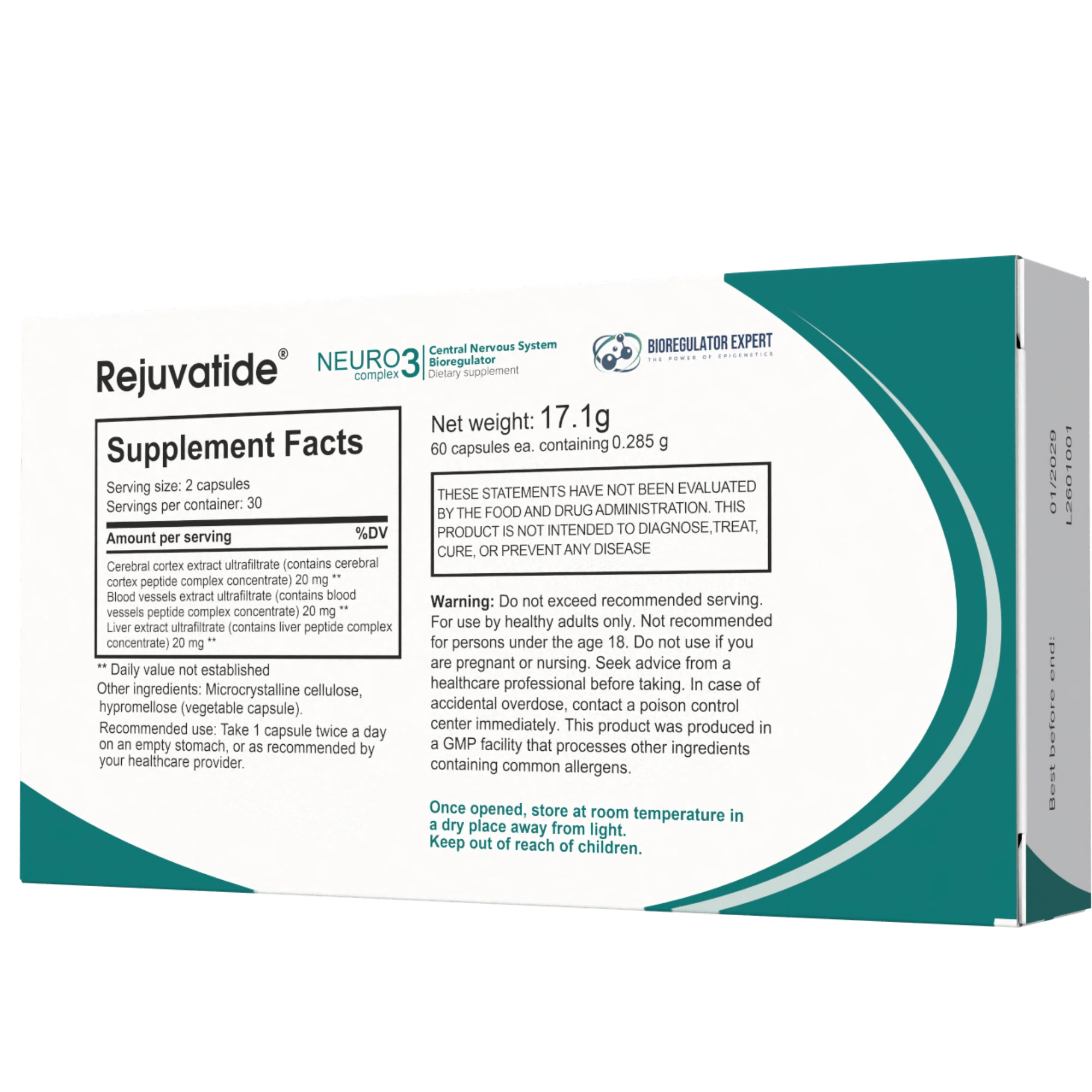
Serving Size: 2 Capsules
Servings Per Container: 30
| Amount Per Serving |
% DV |
| Cerebral cortex extract ultrafiltrate (contains cerebral cortex peptide complex concentrate) |
20 mg * |
| Blood vessels extract ultrafiltrate (contains blood vessels peptide complex concentrate) |
20 mg * |
| Liver extract ultrafiltrate (contains liver peptide complex concentrate) |
20 mg * |
* Daily Value (DV) not established.
Other Ingredients: Microcrystalline cellulose, Hypromellose (vegetable capsule).
Net Weight: 17.1 g
Distributed by: Bioregulator Expert
Directions for Use
Take 1 capsule twice a day on an empty stomach, or as recommended by your healthcare provider.
*These statements have not been evaluated by the Food and Drug Administration. This product is not intended to diagnose, treat, cure or prevent any disease.
Warning: Do not exceed recommended serving. Pregnant or nursing women, children under 18 and individuals with known medical conditions should consult their physician prior to taking.
- KEEP OUT OF REACH OF CHILDREN.
- DO NOT USE IF SAFETY SEAL IS DAMAGED OR MISSING.
- STORE IN A COOL, DRY PLACE.
Science & Research
Did you know? For decades, scientists have studied tissue-specific peptide fractions for their role in cellular communication and biological regulation. These naturally occurring peptides are often described as cellular “messengers” because they help researchers understand how cells exchange information, adapt to stress, and maintain normal function across different tissues and organ systems.
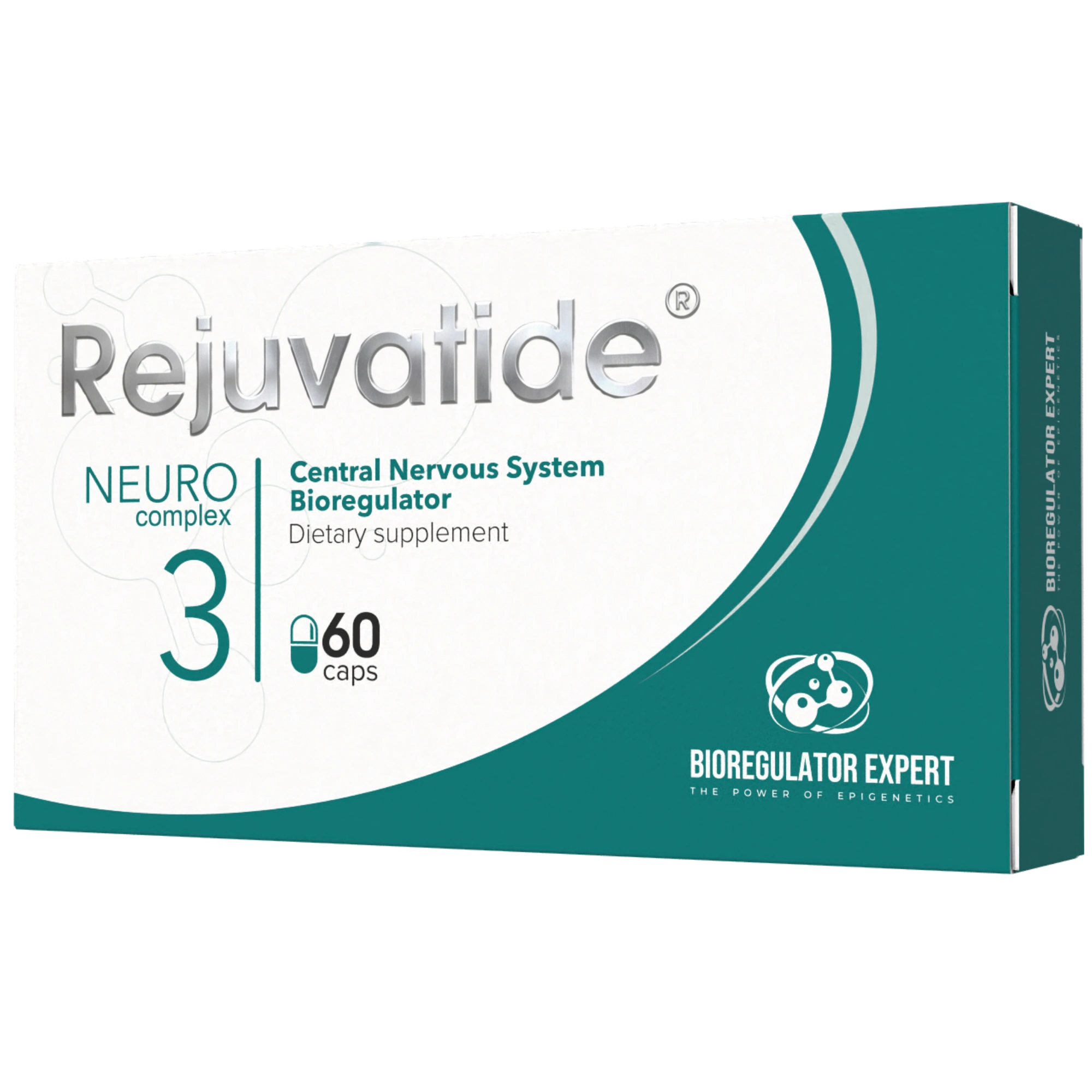
Rejuvatide® Neuro Complex features peptide complexes derived from cerebral cortex tissue, blood vessel extracts, and liver tissue. These bioactive compounds are being studied for their potential role in peptide signaling, gene expression regulation, and cellular communication within neurological and neurovascular tissues. Researchers are particularly interested in how tissue-specific peptides may interact with similar cell types to support normal cellular activity, tissue maintenance, and the complex communication networks involved in cognitive function and nervous system health.
Current research also explores the role of peptide signaling in maintaining cellular balance and adaptation throughout the central nervous system. As neural tissues experience the effects of environmental stressors and natural aging processes, peptides may help support the communication pathways involved in cellular turnover, resilience, and overall biological function. This science-focused approach emphasizes support at the cellular level, where healthy neurological function begins.